Projection
Introduction
Projection mapping has always been something I’ve wanted to learn. I remember coming across it years ago through a project brief and being completely fascinated by its potential—but also a little intimidated. At the time, the software looked really complex and overwhelming. Still, I kept saving references and dreaming about experimenting with it one day.
One of the ideas I’ve always been drawn to is projecting through or onto water—the way light interacts with movement, ripples, and reflections feels magical to me. I’ve held onto that as a personal creative goal.
Getting the chance to finally try projection mapping in this workshop felt like a small step toward that bigger dream. Even though we’re working with paper structures and simpler visuals, the core idea is still the same: using light and form to bring imagination into the physical world. And now that I’ve had this hands-on experience, I’m more excited than ever to keep learning and one day create something immersive of my own.
Process
We knew from the start that projection mapping with water would be tricky, especially with limited testing time. Our main concern became the physical setup—how could we reflect the most light back to the audience, and what kind of patterns could we realistically create? We experimented with a phone torchlight and a water bottle to get a sense of how light might behave. While these small tests gave us ideas, it was still hard to gauge the actual impact without the projector since it's much bigger and throws light very differently.
There were several variables we had to consider carefully:
- The size of the container
- The type of pattern or surface on the container
- The amount of water
- The clarity or transparency of the container
Since we knew it wouldn’t be possible to project the videos perfectly through water, we had to shift our focus toward creating a mood or visual experience rather than precision. That’s when the concept of a lucid dream came in—something surreal, ethereal, and beautiful. We didn’t want it to feel too real; we wanted it to feel like you were drifting into something slightly beyond reality.
This project was highly experimental, and that was the exciting part—it pushed us to think on our feet, adapt quickly, and really consider how light behaves in space.
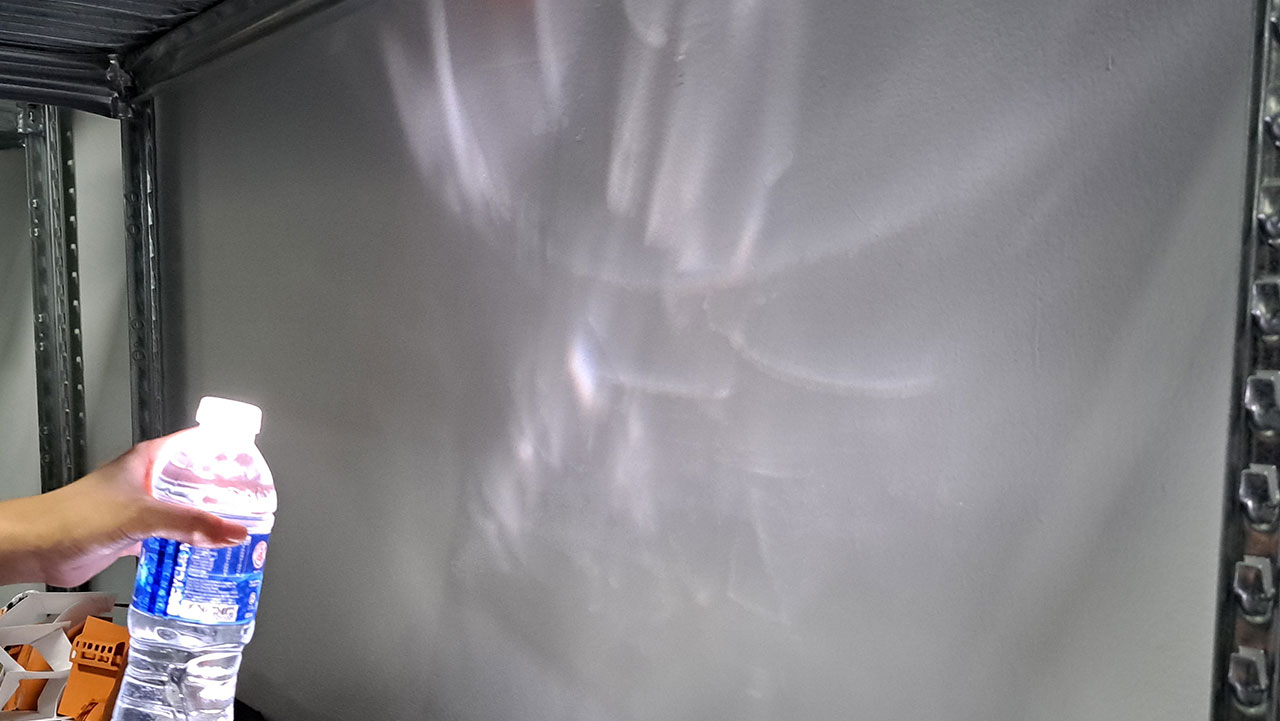
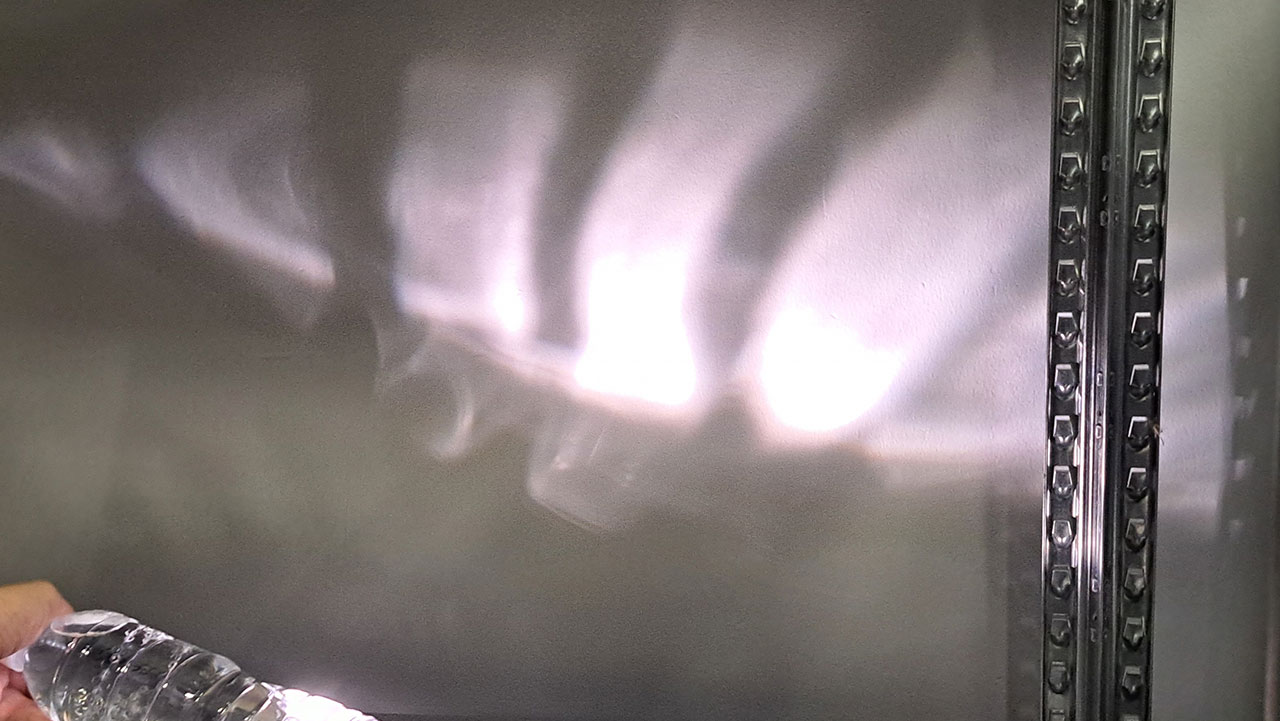
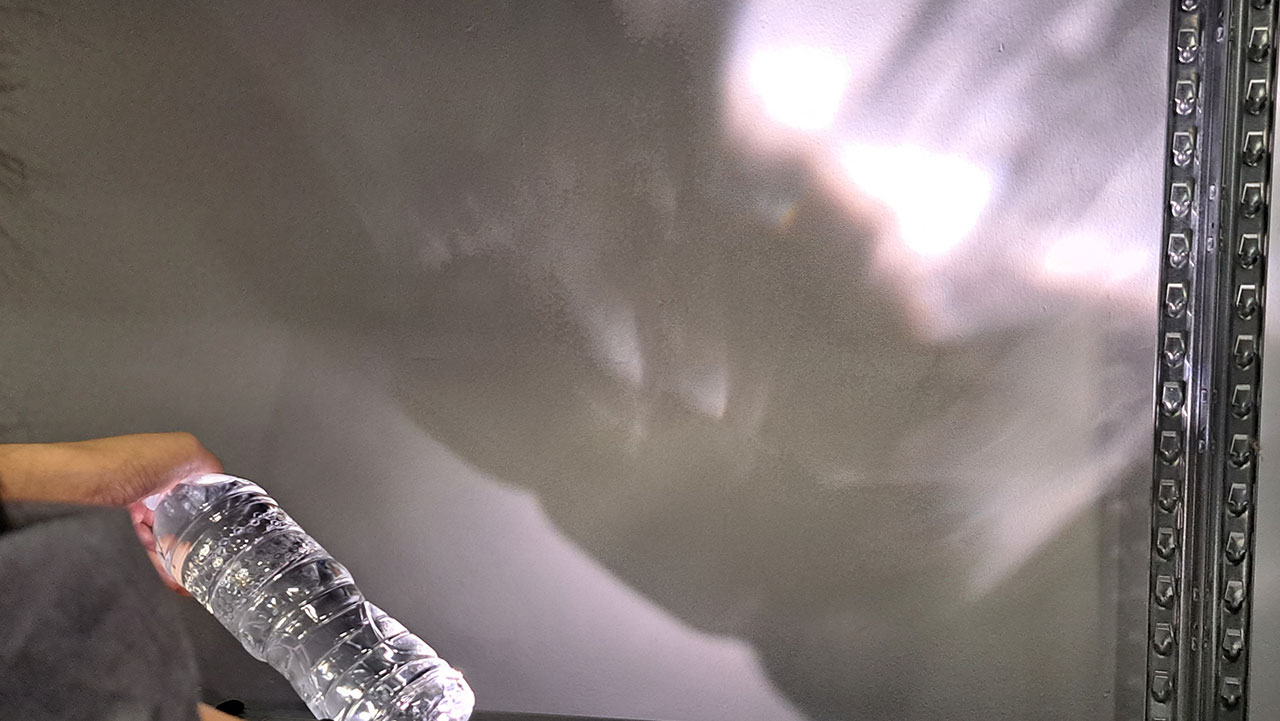
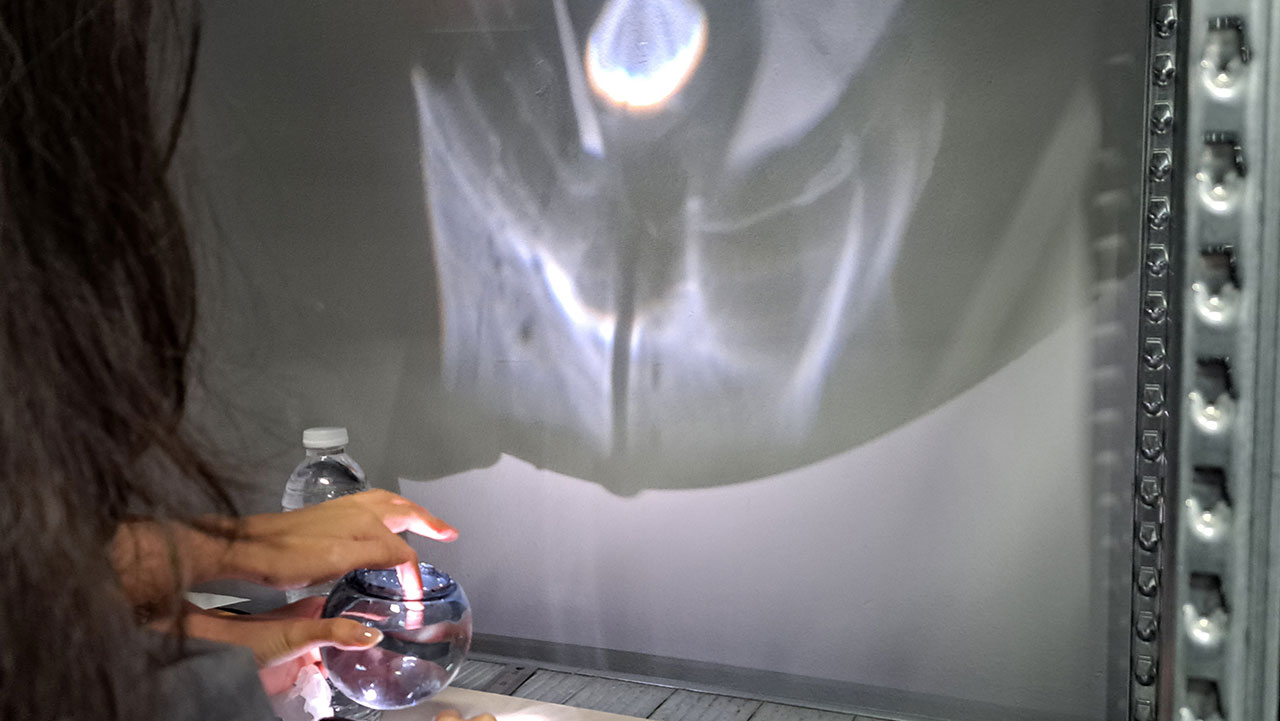
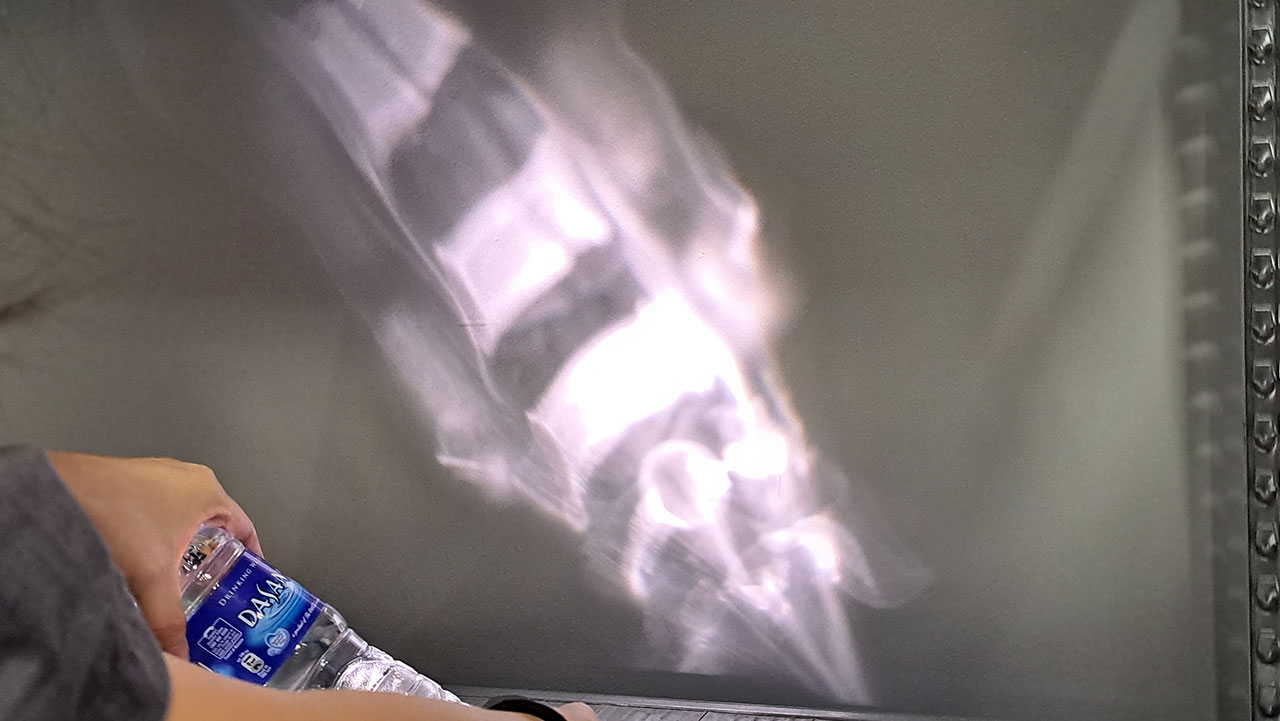
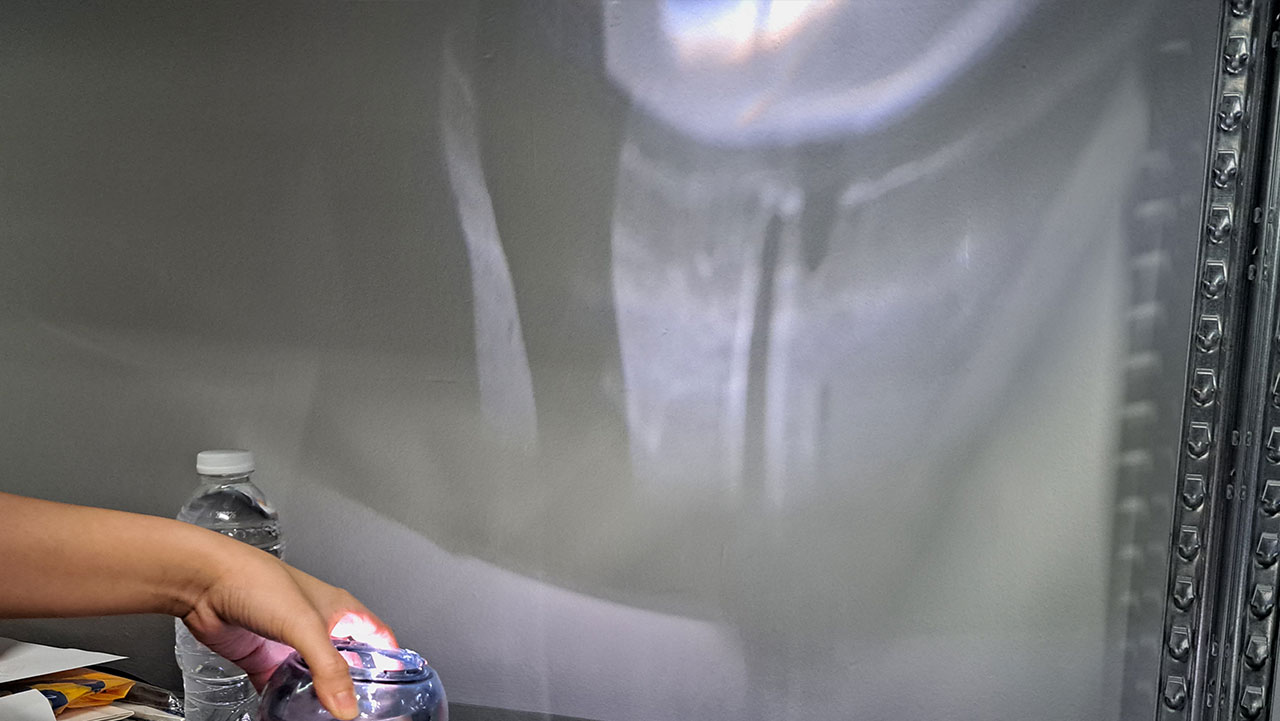
Projection Day
On the day of the projection mapping workshop, we began by familiarising ourselves with the p5.js sketch interface. The setup was relatively straightforward since we didn’t need to manually code the projection coordinates—we were able to adjust the shapes and visuals directly within the UI. After some quick testing, we shifted our focus to building the physical installation.
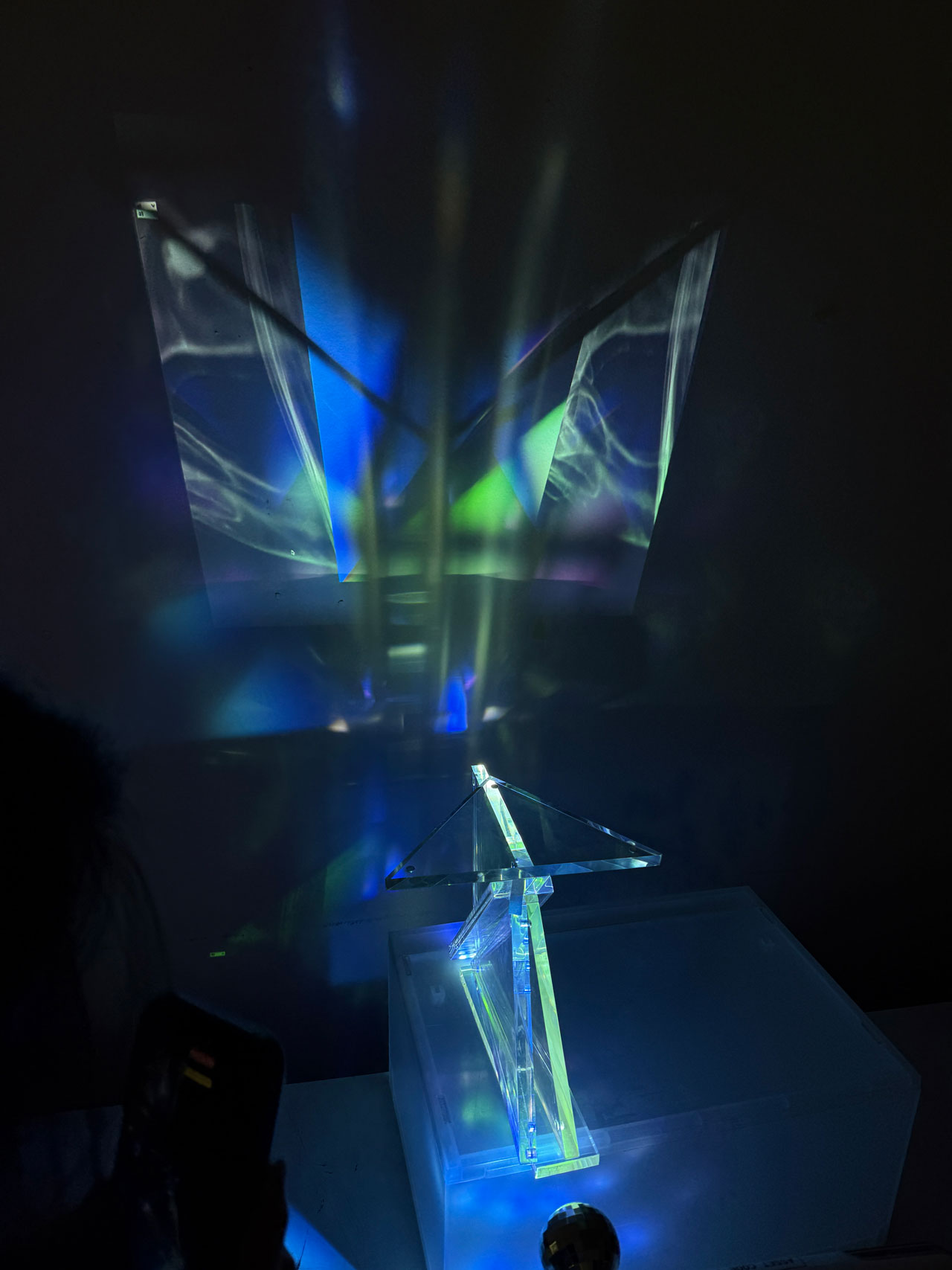
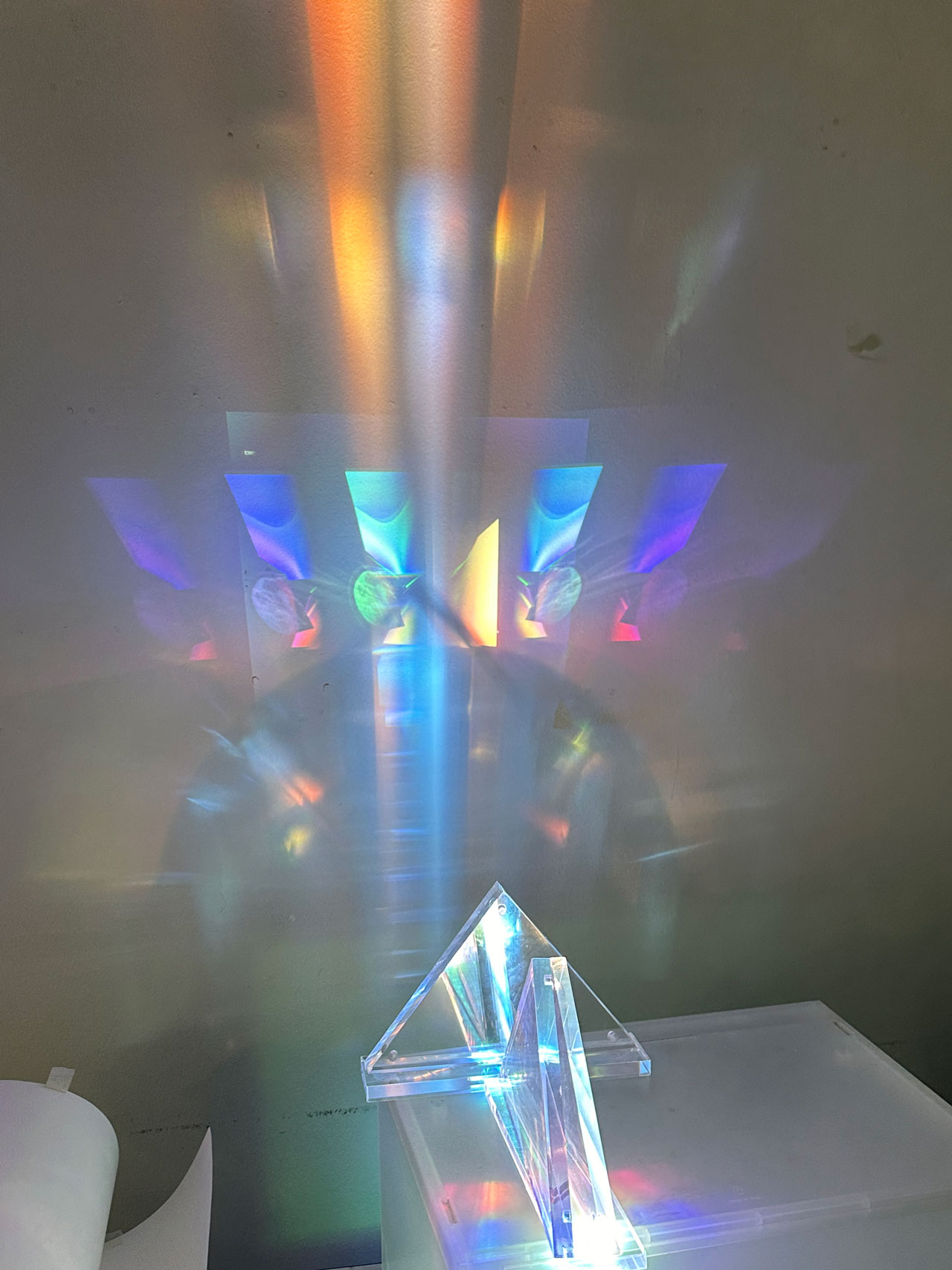
We focused our four prisms at the center of the setup and ran several visual tests. We noticed that using highly saturated, colourful visuals at the central point of projection resulted in the most interesting light distortions. Slight tweaks to the angle of each prism would shift the entire way the light bent and moved, creating a constantly changing visual experience.
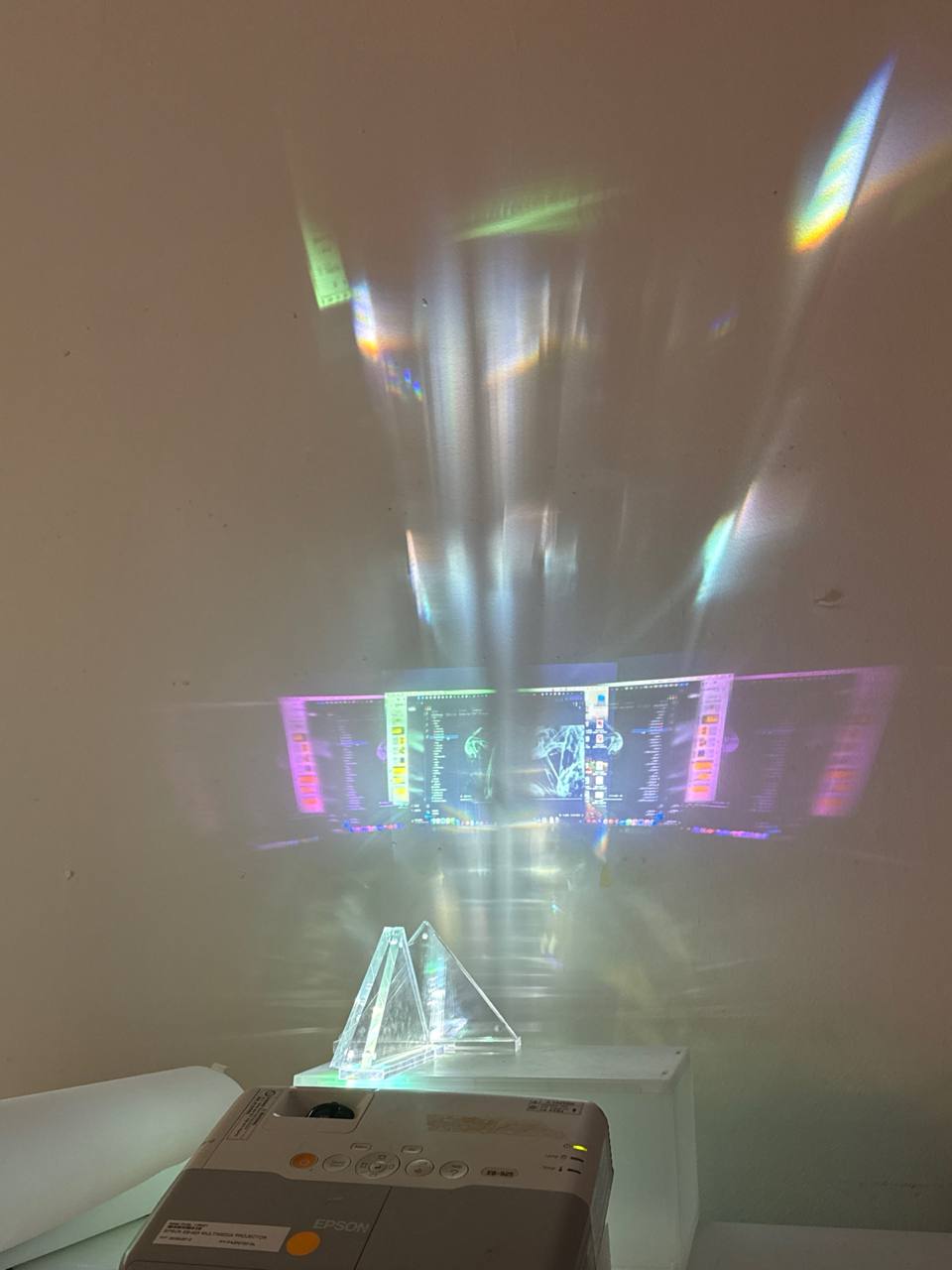
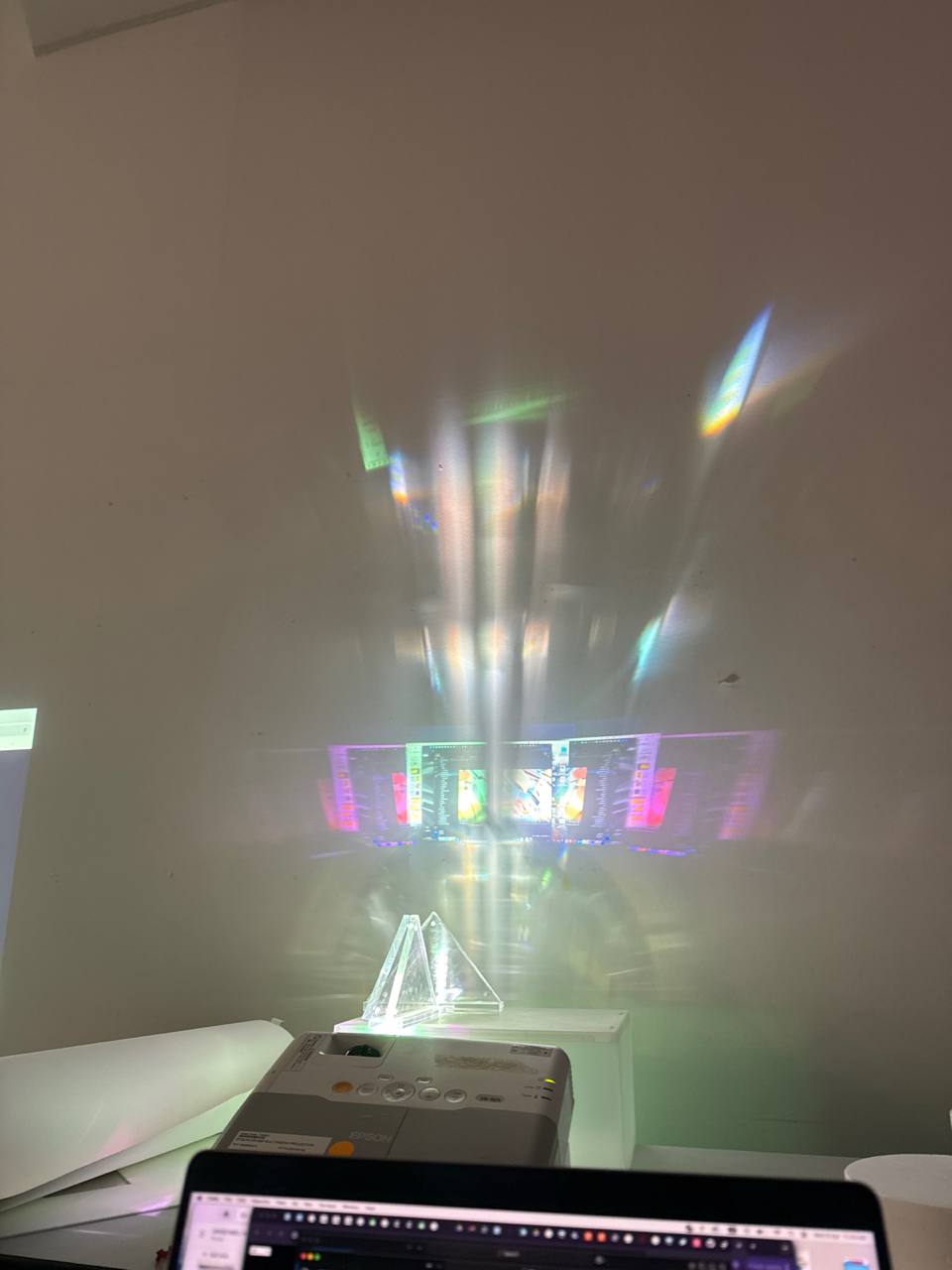
To add to the ethereal, dreamlike quality we were aiming for, we included smoke-like visuals on the sides of the projection. This soft contrast against the sharp refractions helped reinforce the “lucid dream” concept and made the entire installation feel more immersive and atmospheric.
Even though there were challenges—mainly because there were no clear rules or right answers—we had a lot of fun figuring things out through trial and error. The use of prisms turned out to be an unexpected highlight. It pushed the project beyond what we originally planned and added a layer of experimentation that made the outcome feel truly one-of-a-kind.
Findings and Insights
This project revealed how projection mapping is just as much about experimentation as it is about execution. From the beginning, we knew projecting through or onto water wouldn’t give us full control—but it wasn’t about perfection. It was about creating a mood, an atmosphere. This shift in mindset—from technical precision to emotional storytelling—shaped our entire process.
We learned that light behaves unpredictably across different materials, and something as simple as changing the angle of a prism could dramatically alter the outcome. Through hands-on experimentation with torchlights, water, and eventually acrylic prisms, we saw firsthand how refraction and reflection could be manipulated to create dreamlike, immersive effects.
Our biggest takeaway was that designing for projection isn’t linear—it’s responsive. We had to adapt quickly, work with uncertainty, and make creative decisions in the moment. Preparing multiple visuals in advance helped us stay flexible, and sketching alternative setups allowed us to adjust without losing the heart of our concept. In the end, our backup material—prisms—became the highlight of the project.
With light as our paint, anything can become our canvas
- Teamlabs
Reflection
Throughout the process, I learned that projection mapping is less about perfection and more about presence. It’s about how light interacts with form, how visuals can shape mood, and how unexpected results can lead to more meaningful outcomes. I also gained confidence working with new tools like p5.js and better understood how to translate digital visuals into physical space. This workshop reminded me that creativity thrives in the unknown. Not everything went to plan, but the freedom to test, fail, and adapt made the journey all the more rewarding. I’m walking away with a stronger appreciation for projection mapping—not just as a technical tool, but as a medium for storytelling, emotion, and discovery.
What I have learned
Projection mapping, I’ve learned, is not just a technical process—it’s poetic. It’s a form of storytelling through light, shadow, space, and movement, where entire worlds can be built using nothing more than reflections and visuals. Throughout the project, preparation and flexibility proved essential. Having extra visuals and multiple setup plans allowed us to quickly adapt to what was working and what wasn’t, all without losing momentum. Practical experimentation led us somewhere unexpected—instead of our original plan, we used prisms, which produced results that felt even more magical and visually rich than we had imagined. I also discovered how the smallest changes, like slightly adjusting the angle of a prism, could completely transform the outcome, showing me how powerful subtle design choices can be. Most importantly, this experience reminded me that teamwork and quick thinking are key; navigating uncertainties with my group made the entire process more collaborative, rewarding, and creatively fulfilling.